

Fitting an eye exam into a full week is easier when you know how much of the day it’ll take. It’s a fair thing to ask before you pick a time slot. Most eye exams take 30 to 60 minutes. Where you land in that range comes down to your history and the testing your eyes need that day.
Returning patients usually move through faster, since their records are already on file. New patients should plan for the longer end, because a first comprehensive eye exam covers your health background along with a full round of tests. Wearing contact lenses adds a bit more on top of that.
What Affects the Length of Your Visit
A few things stretch or shorten your time in the chair.
Your first visit takes longer than a return trip because there’s more to learn about your eyes. If you wear both contacts and glasses, expect extra time for each. Your age and family health history matter too, since certain concerns need a closer look.
For example, if a parent or sibling has glaucoma, your optometrist may spend longer on pressure readings and a careful look at your optic nerve. Living with diabetes can add retinal imaging to the appointment.
Bring your current glasses and a list of your medications. Small thing, but it keeps the whole visit moving.
Symptoms That May Add Time
Sometimes you walk in with a specific complaint, and the optometrist spends more time getting to the bottom of it. Share these at the start so nothing gets rushed:
- Dryness or irritation that hangs around all day
- Redness that keeps coming back
- Blurry vision that comes and goes
- Eye strain after a long stretch of screen time
- Trouble focusing up close, like on a menu or your phone
What Happens During Your Eye Exam
Each part of the visit has a purpose, and the steps flow into one another. Here’s where those minutes go.
Health History and Preliminary Tests
Your optometrist starts by going over your medications, past eye care, and any surgeries. That paints a picture of what your eyes have already been through.
Quick screenings come next. Those include eye pressure and a peripheral vision test, which measures how well you pick up movement off to the sides. An autorefractor often gives a rough starting point for your prescription before the fine-tuning begins.
Vision and Eye Health Tests
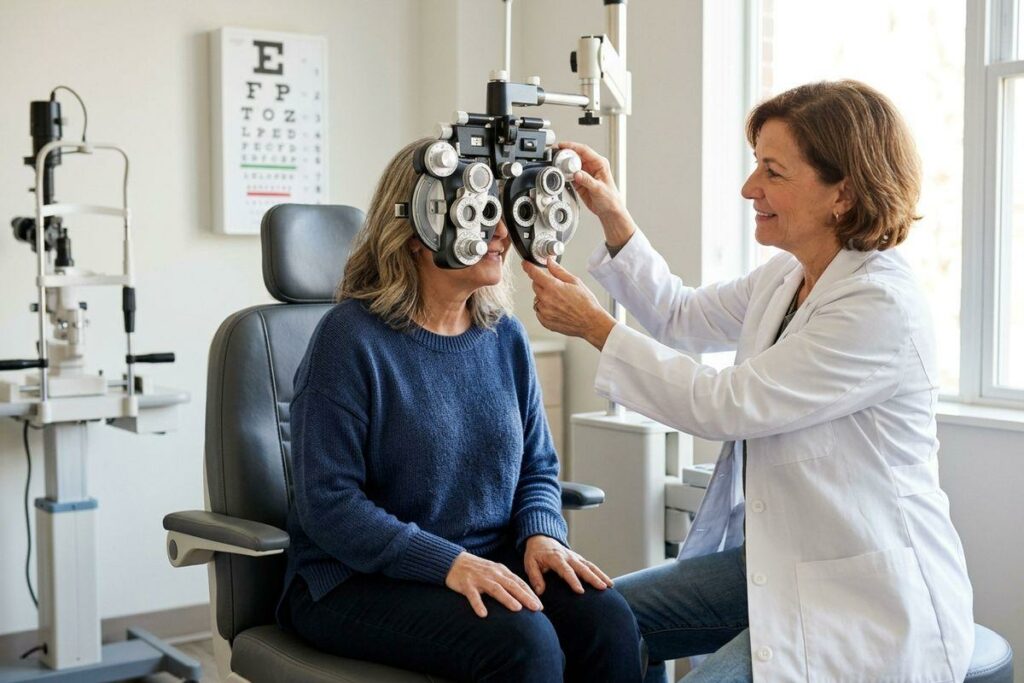
Next, you’ll read the eye chart so your optometrist can measure how clear your distance vision is.
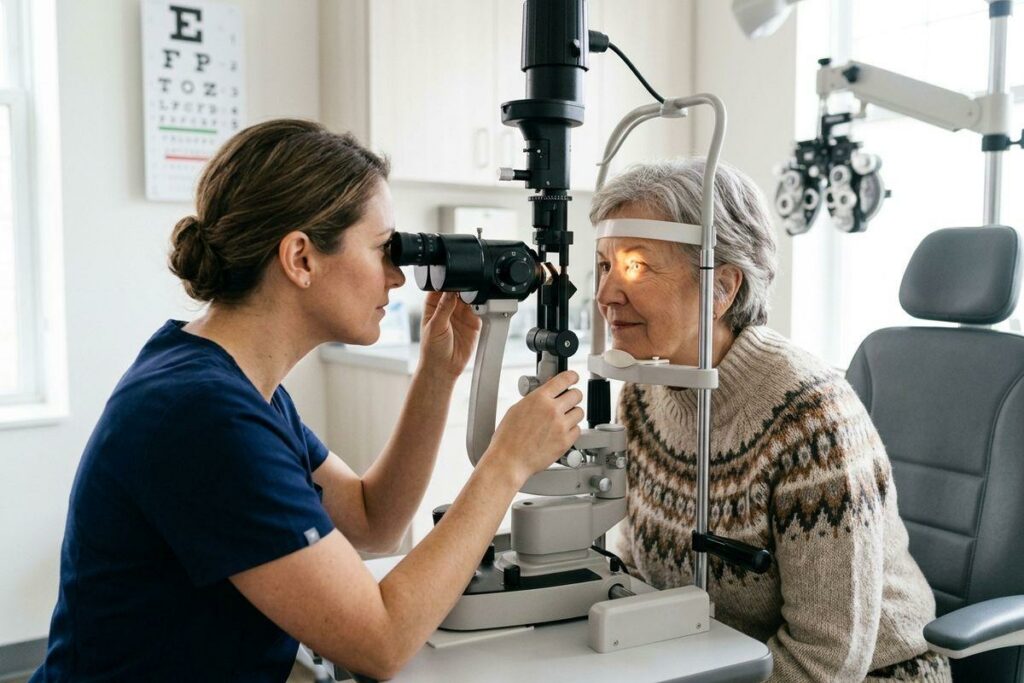
You’ll also compare lenses and say which one looks clearer to fine-tune your prescription. After that comes the slit lamp, a bright light paired with magnification. It lets your optometrist examine the front structures of your eyes, where dryness, irritation, and early corneal changes tend to show up.
How Dilation Tests Change Your Exam Time
A dilated eye exam involves using drops to widen your pupils so your optometrist can see the retina and optic nerve at the back of the eye. Build it into your schedule when you book.
The drops take about 30 minutes to take full effect. Once they kick in, your pupils can stay dilated for up to 6 hours. Bring sunglasses, since bright light can feel harsh in dilated eyes.
Driving right after dilation feels tricky for most people. Your eyes turn sensitive to light, and close-up vision stays blurry for a while. Plan a driver for afterward so you can relax instead of squinting at the road.
How Contact Lens Fittings Add Time
If you want contacts, the fitting adds 15 to 30 minutes to your appointment. That time goes toward getting a comfortable, accurate fit.
Your optometrist measures the curve of your cornea, the clear front surface of the eye, then has you try trial lenses to check comfort and how they move when you blink. New wearers get hands-on practice with putting lenses in and taking them out.
Expect a short follow-up a week or two later so your optometrist can see how the lenses are settling in.
When to Expect Glasses and Contacts
Glasses usually take 7 to 10 days once you’ve picked out your frames. Specialty coatings or a stronger prescription can add a few days.
Trial contacts are often ready the same day, so you can start testing them right away.
An Eye Exam Is Time Well Spent
Block off an hour, jot down anything that’s been bothering your eyes, and sort out a ride if eye dilation is on the table. That’s the planning handled.
At Advanced Eyecare Optometry, our optometrists take time with every patient and answer questions without rushing anyone. Book your appointment and get your eyes looked after.