

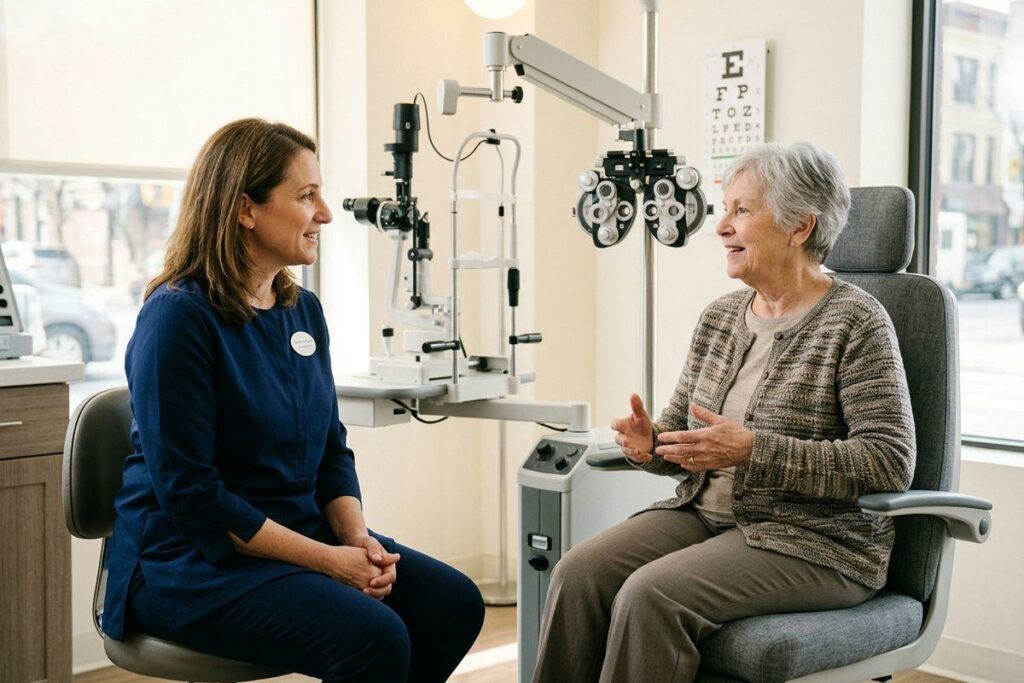
Dry eyes can wear you down more than people expect. Drops help for a little while, and warm compresses take the edge off, but when that relief keeps fading fast, the problem might sit deeper than the surface.
OptiLight can help your dry eyes if the burning, redness, or grittiness comes from blocked oil glands in your eyelids, since it targets that root cause instead of just masking symptoms.
What OptiLight Actually Does
Most chronic dry eye starts with meibomian gland dysfunction, or MGD. Those glands line your eyelids and release the oil that keeps your tears from evaporating too quickly.
When they get blocked, no amount of eye drops can fully make up for it. OptiLight uses light pulses instead of needles or incisions, aiming for lasting comfort rather than a fix that fades by lunch.
The light reduces inflammation around your eyelids, which is often where chronic irritation starts. It also helps clear the blockages so your tears can do their job.
And if bacteria or tiny mites called Demodex are living along your lash line (yes, that’s a real thing), the treatment can help calm that down too.
Signs You May Benefit From OptiLight
Not every case of dry eye points to gland trouble. But a few signs are worth paying attention to:
- Burning, stinging, or a gritty feeling that won’t quit
- Red or irritated eyelids, especially by evening
- Little to no lasting relief from drops or warm compresses
Who Should Consider This Treatment
Adults with moderate to severe dry eye often find this treatment worth exploring, especially when MGD is the cause. If you’ve used drops for months without much change, it’s worth asking about.
Age doesn’t rule anyone out. Ask about it for yourself, or bring it up for a parent who’s dealt with the same symptoms.
What Happens During Your OptiLight Visit
The appointment moves fast. A session takes about 15 minutes from start to finish, so it can fit into a lunch break.
Before treatment starts, you’ll get a protective shield over your eyes and a cooling gel on the skin. Then come the light pulses.
Most people describe the feeling as warm, like sitting near a sunny window. It shouldn’t feel sharp or painful.

Recovery and Aftercare Tips
Mild redness can show up right after treatment, but it typically fades within a few hours. Head back to work, pick up your kids, or run errands the same day.
Follow your optometrist’s specific aftercare tips. They’ll help you get the most out of each session.
What Results Can You Expect
Some people notice a difference after just 1 session. Full benefits typically build over a series of 4 treatments, spaced a few weeks apart.
Once you finish the series, relief may last several months before a touch-up session makes sense.
How OptiLight Compares to Eye Drops
Eye drops are excellent at easing the surface symptoms, but they don’t address the blocked glands causing the problem in the first place. OptiLight works on that root issue instead.
OptiLight and eye drops often work well together: drops cover you day to day, and OptiLight works on what’s happening underneath.
Questions to Ask Before You Start
Ask your optometrist about possible side effects, and whether anyone in your household should hold off on treatment, such as those with certain skin conditions or recent sun exposure.
Share your medical history openly during your consultation. It can affect whether OptiLight fits your situation. Some factors may mean Optilight isn’t right for you, such as:
- Certain medications
- Active acne
- Are susceptible to keloid scarring
- Have severe scarring or recent sunburn
- Certain skin disorders
Let’s Find the Right Fit for Your Eyes
Eye care needs change at every stage of life, from a parent noticing changes in their own vision to a teenager who spends hours in front of a screen. A dry eye plan built around your specific symptoms tends to work better than a one-size-fits-all approach.
At Advanced Eyecare Optometry, we build eye care plans around each person’s needs, from routine exams to treatments like OptiLight. Schedule a visit and let’s talk through what your eyes have been telling you.