

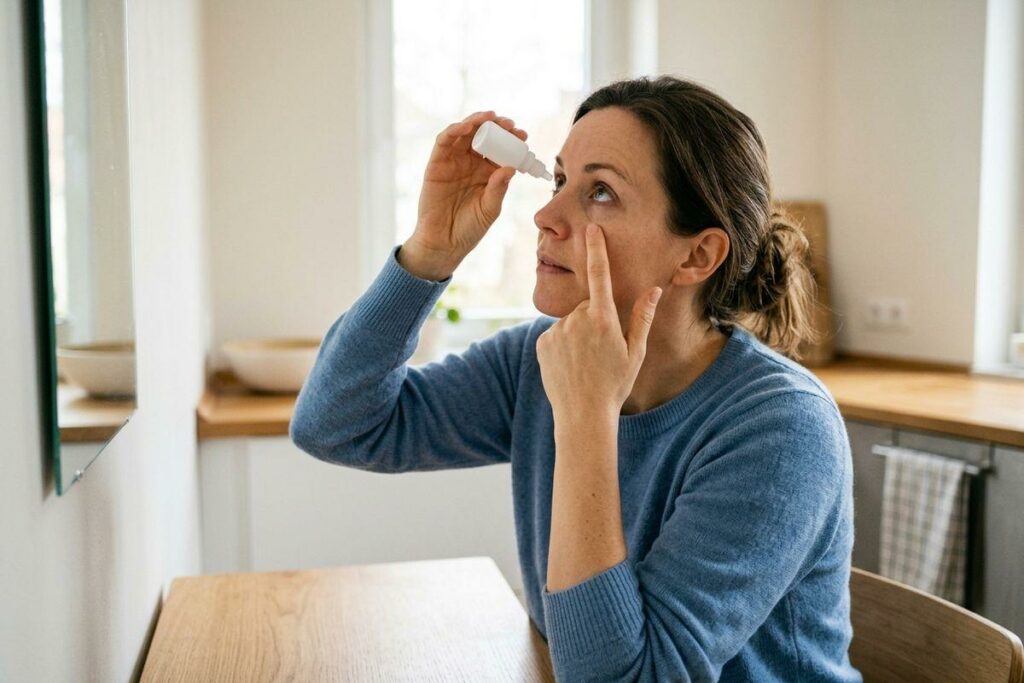
Atropine has been part of eye care for a long time, and it still comes up in plenty of conversations at the optometrist’s office. You might hear about it during a child’s eye exam, or when you’re asking about ways to slow down your kid’s nearsightedness through myopia control.
Atropine eye drops relax the focusing muscles inside your eye and widen your pupil, which can help with eye exams, lazy eye, myopia in kids, and pain from inflammation. Here’s what each use involves and what to expect at home.
What Are Atropine Eye Drops
Atropine is a prescription drop that blocks signals to the eye muscles that control your pupil size and focus. Once those muscles relax, your pupil opens up, and your eye can’t adjust its focus for close-up tasks.
You’ll usually see it labeled as atropine sulfate, though some pharmacies carry the brand name Isopto Atropine. It comes in different strengths. The full-strength drops used for exams and inflammation work very differently from the low-dose drops some kids use for myopia, so don’t assume one bottle can stand in for another.
What Are Atropine Eye Drops Used For?
Your optometrist may recommend atropine for 4 main reasons.
Atropine for Dilated Eye Exams
Your optometrist needs a clear look at the retina and optic nerve at the back of your eye. A wider pupil lets in more light, so your optometrist can check for changes that a standard exam light may not show.
Most routine exams use shorter-acting drops. But kids have strong focusing muscles that can throw off a glasses prescription, so atropine can help relax them and provide a more accurate reading.
Atropine for Lazy Eye
Some children with amblyopia, often called lazy eye, use atropine drops instead of an eye patch. Put a drop in the stronger eye, and vision in that eye gets blurry for a while.
That encourages the brain to rely on the weaker eye, which can help it develop. And for a lot of families, a daily drop is easier to stick with than a patch, especially if your little one keeps pulling it off.
Atropine for Myopia Control
Low-dose atropine is also part of many myopia management plans for kids. Your child uses 1 drop at bedtime, and over time it may slow how quickly their nearsightedness progresses.
The drops don’t correct vision on their own, so your child will still wear glasses or contact lenses. Because the dose is so low, kids tend to have fewer side effects than they would with full-strength drops.
Atropine for Eye Pain and Inflammation
Swelling inside the eye, like uveitis, can make the muscles around your pupil spasm. That hurts.
Atropine relaxes those muscles and can ease the ache while other treatment works on the inflammation. You’ll typically use it for a set period while your eye heals, and your optometrist will tell you when to stop.

How to Use Atropine Eye Drops
Getting the drop in the right spot can help the medication do its job. Follow these steps each time:
- Wash your hands before and after each drop.
- Tilt your head back and look up.
- Gently pull down your lower eyelid to make a small pocket.
- Squeeze 1 drop into that pocket without letting the tip touch your eye or lashes.
- Close your eye for 1 to 2 minutes and press lightly on the inner corner.
What to Avoid While Using Atropine Eye Drops
Your pupils stay wide after each dose, so more light gets into your eyes than usual. Grab a pair of sunglasses before you head outside, even on a cloudy day.
A few other habits can help while you’re using the drops:
- Hold off on driving until your vision feels normal again.
- Ask your optometrist before using any other eye drops, including artificial tears.
- Check with your optometrist before wearing contact lenses or using lens solutions.
What Side Effects Should You Watch For
Most side effects are mild and go away after you stop the drops. Watch for a few of these in the hours after a dose:
- Stinging right after the drop goes in
- Blurry vision, especially up close
- Sensitivity to light
- Dry mouth
With full-strength drops, blurriness and light sensitivity can last up to 2 weeks. So plan ahead if your child has a big test or sports game coming up.
Some reactions need attention right away. Call your optometrist or get medical help if you notice:
- Hives
- Swelling in your face, lips, or throat
- A fast or pounding heartbeat
- Restlessness or irritability, especially in kids
Talk to Your Optometrist About Atropine Eye Drops
Maybe your child’s prescription keeps climbing, or you’ve just been handed a bottle of atropine and have questions. Either way, you don’t have to figure it out alone.
Our team at Advanced Eyecare Optometry can explain how atropine may fit into your family’s eye care and what to watch for at home. Book an appointment and let’s talk through your options together.